CTRAPS: CTAP Impersonation and API Confusion on FIDO2
Abstract
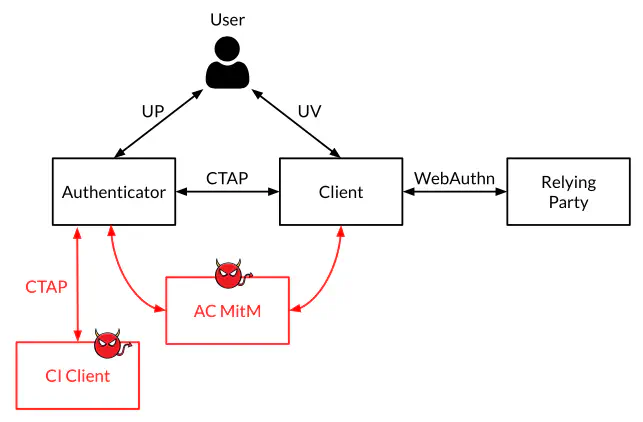
FIDO2 is a popular technology for single-factor and second-factor authentication. It is specified in an open standard including the WebAuthn and CTAP application layer protocols. We focus on CTAP which allows the communication between FIDO2 clients and authenticators. No prior work explored the CTAP Authenticator API which is a critical protocol-level attack surface as it deals with credential creation, deletion, and management. We address this gap by presenting the first security and privacy evaluation of the CTAP Authenticator API. We uncover two classes of CTAP protocol-level attacks we call CTRAPS.The client impersonation (CI) attacks exploit the lack of client authentication to tamper with FIDO2 authenticators. They include zero-click attacks capable of deleting FIDO2 credentials, including passkeys, without user interaction. The API confusion (AC) attacks abuse the lack of protocol API enforcements and confound FIDO2 authenticators, clients, and users into calling unwanted CTAP APIs while thinking they are calling legitimate ones. For example, a victim thinks is authenticating to a website, when they are deleting their credentials. The CTRAPS attacks are conducted either in proximity or remotely and are effective regardless of the underlying CTAP transport (USB, NFC, or BLE).We detail the eight vulnerabilities in the CTAP specification enabling the CTRAPS attacks. Seven of them are novel and include unauthenticated CTAP clients and trackable FIDO2 credentials. We release CTRAPS, an original toolkit to analyze CTAP and conduct the CTRAPS attacks. We confirm the attacks’ feasibility by exploiting six popular authenticators, including a FIPS-certified one, from Yubico, Feitian, SoloKeys, and Google, and ten widely used relying parties, such as Microsoft, Apple, GitHub, and Facebook. We discuss eight backward-compliant countermeasures to fix the attacks and their root causes. We responsibly disclosed our findings to the FIDO Alliance and the affected vendors.